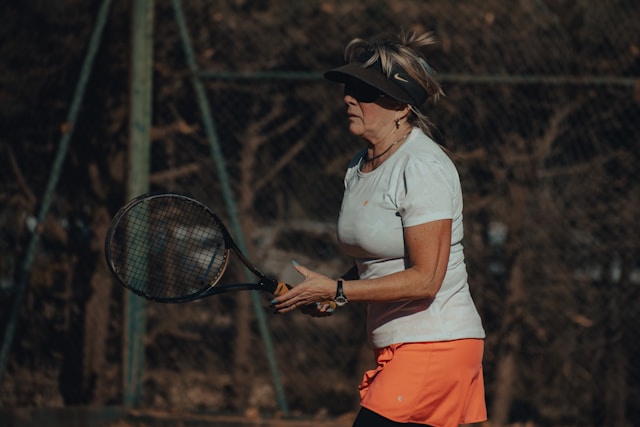
 Tennis newcomers
America's tennis newcomers: what the 2025 data actually shows
Last updated: June 2026
Tennis is still growing in the United States, but the more useful story is what is happening underneath the headline number. In 2025, USTA says 27.3 million Americans ages 6 and older played tennis at least once. Within that total, 4.9 million played for the first time, 1.7 million returned after at least a year away, and 20.7 million kept playing from the year before.
That matters because it points to something more durable than a one-year spike. USTA says 80% of players from 2024 played again in 2025, a five-year high for retention. Core players, defined as people who played 10 or more times in the past year, also reached a record 14.5 million. Together, those numbers suggest that tennis is not only attracting beginners. It is also keeping them around.
Who is coming to tennis?
The growth is broader than the old country-club stereotype. In 2025, established adults ages 35 and older drove nearly 95% of total growth, while youth participation also added about 200,000 players. At the same time, players under 35 still represented 55% of all U.S. tennis participants.
The player base also continued to diversify. Women accounted for 44% of U.S. tennis players in 2025. Black players made up 14% of players, and Hispanic/Latino players 19%. Over the longer post-2020 period, USTA says participation has grown faster among Hispanic and Black players than in the general population.
What helps beginners stick
Starting tennis is one thing. Staying with it is another. That is where the 2025 numbers get interesting. USTA recorded 616 million total play occasions in 2025, and core players accounted for 93% of them. The sport is growing not just because more people tried it once, but because more people are turning it into a habit.
Part of that habit is simple access. In the 2025 participation report, public parks were still the most common primary place people played. That does not mean every city works the same way, but it does mean beginner tennis in America is not confined to private clubs.
For true beginners, USTA's red, orange, green, and yellow (ROGY) ball progression is useful because lower-compression balls move more slowly and bounce lower, giving new players more time to set up and rally. Cardio Tennis is another beginner-friendly entry point: USTA says the format was created in 2005 with the Tennis Industry Association, uses lower-compression balls, and even allows a second bounce so newer players can keep points alive.
How to make your first month easier
A few practical choices make starting tennis less frustrating.
- Take a beginner lesson or join a beginner clinic early. The goal is not perfection. It is learning how to rally, serve, and keep score without building bad habits.
- If you are buying your first racquet, start simple. Wilson recommends an oversize head for beginners, roughly 105 to 110 square inches, with a lighter frame in the 9 to 10 ounce range, because it is easier to swing and more forgiving on off-center contact. If you are unsure about grip size, choose the slightly smaller option; you can always build it up with an overgrip.
- Do not over-index on playing real tennis immediately. Slower balls, group classes, and short-format drills exist for a reason. They make the first few weeks playable.
Where Doyouplay fits
The beginner problem is not just learning forehands. It is finding people at the right level, on the right schedule, often enough to turn a first hit into a real habit.
That is where Doyouplay fits: helping new and returning players find compatible partners for games they can actually keep.
New to tennis? Find your people.
The hardest part of starting is finding someone to hit with. Find compatible players near you and turn a first hit into a regular game.

Continue reading
Sources
- USTA, 2026 U.S. Tennis Participation Report.
- USTA, What tennis level is right for me?: ROGY.
- USTA, Everything you need to know about Cardio Tennis.
- Wilson, How to choose a tennis racket.
Find your next tennis partner
We built exactly what you need to start playing. Safe, easy, zero friction.
- Connect through chat
- Our chat system makes it easy to connect with other tennis players directly.
- All skill levels welcome
- From beginners buying their first racket to seasoned 5.0 players, everyone can find suitable partners.
- It's free
- Enjoy all the benefits with no fees. Finding tennis partners has never been easier.
