Tennis court guide

Roosevelt Park Tennis Courts

62 W Roosevelt Rd, Chicago

Setup
No lights
Chicago Loop, 62 W Roosevelt Rd tennis

Location Guide

Roosevelt Park Tennis Courts

A Small Cluster Of Courts Under The Loop Roosevelt Park Tennis Courts sit a short walk south of the Chicago Loop, at 62 W Roosevelt Road, tucked between elevated roadways, train tracks, and the slow shift of the Near South Side toward downtown life.
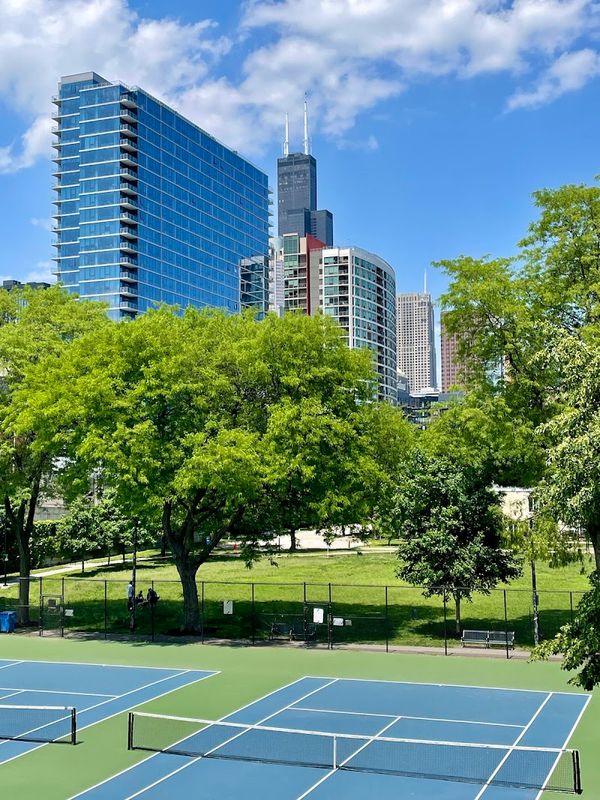

Roosevelt Park Tennis Courts tennis courts

A Small Cluster Of Courts Under The Loop Roosevelt Park Tennis Courts sit a short walk south of the Chicago Loop, at 62 W Roosevelt Road, tucked between elevated roadways, train tracks, and the slow shift of the Near South Side toward downtown life. The park covers a little more than two acres, with open grass, a small playground, and three public tennis courts set behind chain-link fencing. Regulars talk about bringing a dog and a racket, and treating the park as a quick escape from the Michigan Avenue crowds. The neighborhood feel is straightforward. Office workers drift down from the Loop. South Loop residents cut across Clark or Wells. Students from Roosevelt University and nearby colleges walk over with racquets strapped to backpacks. There is no country club polish here. The backdrop is Roosevelt Road traffic, Metra trains, and the sound of pickup games on the basketball court. On clear afternoons the courts draw a steady line of players. Longtime visitors say the courts are taken on the nicest sunny days, but not swamped. Most players arrive on foot or by transit. Roosevelt station on the Red, Orange, and Green lines sits a short walk east. Buses run along Roosevelt Road. Cyclists lock up to nearby fencing or signposts. Drivers snake under the viaducts, aiming for street parking on adjacent blocks or paid garages closer to the Loop, then walk in under the elevated Roosevelt overpass. ### How Play Works Here Roosevelt Park is part of the Chicago Park District system. The tennis courts are outdoor, public, and free to use, with no staffed pro shop and no on-site reservation desk. Listings on tennis community sites describe the park as a simple outdoor setup, no lights for night play, two to three courts depending on how you count the surfaces, and open to drop‑in use. That structure shapes how people play. There is no online booking calendar dedicated to Roosevelt Park. Chicago Park District’s central system can run group lessons or youth programs out of a park, but day to day at Roosevelt the pattern is informal. Players arrive, scan for an open court, and sort things out face to face. On busy days people wait on the benches or fence line and rotate in after a set. Costs are minimal. There is no court fee for casual play. Players bring their own balls and water. Organized leagues such as Gladiator Tennis have used the park for flexible schedule matches, confirming that the courts are acceptable for regular competitive play even without lighting. There is no permanent teaching academy on site. If a coach works here it is on a private, arranged basis, not through a staffed facility. Lighting shapes the daily rhythm. With no fixed court lights, Roosevelt essentially runs on daylight. That means play starts once the sun is up and ends when it dips behind downtown or storm clouds roll in. Summer evenings stretch later, but after dusk the courts go dark and players move on. Seasonality is blunt. These are outdoor hard courts exposed to Chicago weather. In winter, snow and ice shut play down. In early spring and late fall, surface temperature, wind off the lake, and rain matter more than calendar dates. There is no bubble or cover at this park. Players who want winter tennis head to indoor facilities further south or west, including larger complexes like XS Tennis. Roosevelt Park comes back to life when the sidewalks dry and wind chills ease. ### What Beginners Should Expect For a beginner, Roosevelt Park behaves like a public playground for tennis. There is no check‑in desk. No posted ladder or curated ranking ladder. A new player walks in, finds an open court, and hits. The surfaces are standard city hard courts. Expect some scuffs and patched areas, not precision grooming. The fences are tall, and there is some ball chasing toward the grass or path. A beginner who shows up alone often ends up hitting serves or practicing groundstrokes against a partner, a friend, or the back fence. Crowd behavior is informal but mostly cooperative. On warm weekends players queue up during prime hours. A newcomer who speaks up and asks about court rotation tends to find a spot. Weekday mornings and mid‑afternoons run quieter, which suits early learners who want space without feeling watched. For structured learning, Roosevelt Park itself does not run a resident teaching program or branded academy. That gap pushes beginners to either bring an experienced friend, contact a private coach willing to meet on public courts, or connect through digital communities that help match learners with patient partners. ### Getting There, Parking, And Staying Comfortable The address, 62 W Roosevelt Road, sits at a hinge in Chicago’s street grid, where downtown density fades into the Near South and Near West sides. Reaching the courts feels different depending on the mode of travel. Transit riders take the Red, Orange, or Green Line to Roosevelt, then cross under the tracks and head west toward Clark and Wells. Bus routes along Roosevelt provide another option. Many players walk in from nearby high‑rises in the South Loop or from offices in the Loop, crossing major streets and ducking under the raised roadway near the park. Drivers face the usual central Chicago tradeoffs. There is limited metered street parking along nearby blocks, subject to rush‑hour restrictions. Some players choose paid lots or garages closer to the Loop, then walk seven to ten minutes to the courts. On weekends, parking opens up but big event days near the Museum Campus or Soldier Field can spill into the area and absorb spaces. Safety expectations mirror a small park near downtown. Reviews describe Roosevelt Park as pleasant and not crowded, partly because it sits off the main Michigan Avenue track. Foot traffic is consistent but not overwhelming. Daytime play feels routine. As with any city park, players who stay into dusk keep an eye on surroundings, stick to well‑lit paths, and leave valuables out of sight. There is no staffed security presence on the courts themselves. Weather is the constant variable that shapes play here. The park is exposed to wind and sun, with limited large trees compared to deeper neighborhood parks. On hot summer days, the hard surface radiates heat and calls for extra water and light clothing. On shoulder seasons, cool wind off the lake cuts across the courts and makes grip and feel more challenging. After heavy rain, puddles form and dry time can stretch, since there is no crew dedicated solely to tennis maintenance. For food and coffee, players rely on the broader South Loop and Loop inventory. Roosevelt Road, State Street, and Wabash Avenue have chains and independent spots where players grab iced coffee before a session or refuel afterward. Closer to the lakefront, casual restaurants around the Museum Campus sit within a walk, though they cater more to visitors and game‑day crowds. The park itself does not host concessions. Most players bring snacks or plan a stop on the way back home or to work. ### The Local Tennis Pulse Even with only a few courts, Roosevelt Park has drawn organized play. Community sites track more than eighty distinct league players who have logged matches here in recent seasons. That number matters. It suggests that the courts support repeat competitive use, not just one‑off hits. Day to day, the tennis pulse depends on timing. Midsummer weekends run busy, especially late mornings and late afternoons, when pairs and foursomes show up for doubles. Weekday early evenings draw office workers who leave downtown and want a quick match before heading home. Early mornings see dedicated players who want cooler air and empty courts. The skill mix runs wide. Casual hitters share space with league players finishing scheduled matches. Some people arrive in coordinated pairs with a clear agenda. Others show up in small groups, rotate games, and lean on informal pickup play. You hear everything from quiet rallying to animated set scoring and match recaps at the fence. Because the courts sit near major universities and office towers, the age range is broad. Students mix with mid‑career professionals and longtime city residents who have played here through years of neighborhood change. That variety helps the courts avoid becoming a closed circle. New faces appear each season, then decide whether to commit or drift to other parks. ### How Doyouplay Fits Into This Landscape Roosevelt Park’s biggest limitation is structural. The courts are free, open, and public. There is no in‑person matchmaking. If you arrive alone, court access is easy but finding a partner depends on coincidence or prior planning. That is where Doyouplay changes the experience. Doyouplay treats Roosevelt Park Tennis Courts as one of many playable locations across Chicago, but it allows free browsing of players who already like to hit here. A newcomer can set skill level, preferred formats such as singles or doubles, and general availability, then see who else matches those preferences. Instead of walking through the gate and hoping an open slot lines up with someone compatible, the player can arrange a match ahead of time and show up knowing who will be across the net. Communication stays direct and low pressure. The platform uses one‑to‑one chat, so players can talk through basics before meeting. They can confirm which court, which time, how competitive the match will be, and whether it is a casual hit or a proper set. There is no public comment wall that turns planning into performance. The interaction stays focused on logistics and comfort. For people who moved to Chicago recently, or who are returning to the game after a long break, this matters more. Walking into a city park with racquet in hand can feel uncertain if you do not know local norms. Doyouplay functions as a quiet back channel, surfacing people in similar situations who also want structured but relaxed games. Many of those players already favor Roosevelt Park because it is accessible from downtown and transit, and because court fees do not get in the way. The broader community layer helps Roosevelt connect to the rest of the city’s tennis map. A player who starts at Roosevelt Park can later branch out to other courts through the same account. When winter closes outdoor play here, indoor options show up as alternative locations. The network keeps acquaintances visible, so someone who met a hitting partner at Roosevelt can continue playing together even if the venue changes. ### Practical Advice For First‑Time Visitors New players heading to Roosevelt Park Tennis Courts do best with a simple plan. Show up with basic gear: racquet, balls, water, and layers that can handle Chicago’s mixed conditions. Aim for daylight hours, since there are no lights on the courts. If you want a quieter experience, target weekday mornings or cooler weekend windows, when demand for courts drops and you can settle in without much waiting. Give yourself a bit of navigation time. Elevated Roosevelt Road, nearby train lines, and the mix of Near South and Loop streets can make the first visit slightly disorienting. Once you locate the park’s entrance near 62 W Roosevelt Road, the courts stand clearly inside the fencing and open space. Consider using Doyouplay before you go. Browsing by skill and preferences lets you line up a partner who already knows the park. That person can help you orient to the area, share unwritten norms about court rotation, and turn a first visit from a solo practice session into an actual match. Roosevelt Park Tennis Courts will not impress someone hunting for spa‑level tennis amenities. They function as simple, public hard courts, threaded into the fabric of central Chicago. For players who care more about the rally, the match, and the convenience of walking from the Loop to a net and painted lines, they provide exactly what is needed. With the added structure of Doyouplay’s matching and chat tools, the courts become an easier place to build a tennis routine, meet local partners, and keep the game in regular rotation.

Download on the App Store
avatar

Nearby players looking for a partner

Find a partner

Help others find great courts

Share tips about parking, hours, court conditions, or anything useful for players.

Loading reviews...

Nearby tennis courts

Grant Park Tennis Courts

Tennis Court, 1000 S Columbus Dr, Chicago

0.5 mi away

Setup:
No lights

Sheridan Park Tennis Courts

900 S Aberdeen St, Chicago

1.3 mi away

Setup:
No lights

Maggie Daley Park Tennis Courts

425 E Randolph St, Chicago

1.3 mi away

Setup:
No lights

Lake Shore Tennis Court

808 N Lake Shore Dr, Chicago

2.1 mi away

Setup:
No lights

Oz Park Tennis Courts

613-601 W Dickens Ave, Chicago

3.7 mi away

Setup:
No lights

Lombard Commons Tennis Courts

E Maple St &, S Fairfield Ave, Lombard

19.4 mi away

Setup:
No lights

Find your next tennis partner

We built exactly what you need to start playing. Safe, easy, zero friction.

Connect through chat
Our chat system makes it easy to connect with other tennis players directly.
All skill levels welcome
From beginners buying their first racket to seasoned 5.0 players, everyone can find suitable partners.
It's free
Enjoy all the benefits with no fees. Finding tennis partners has never been easier.
App